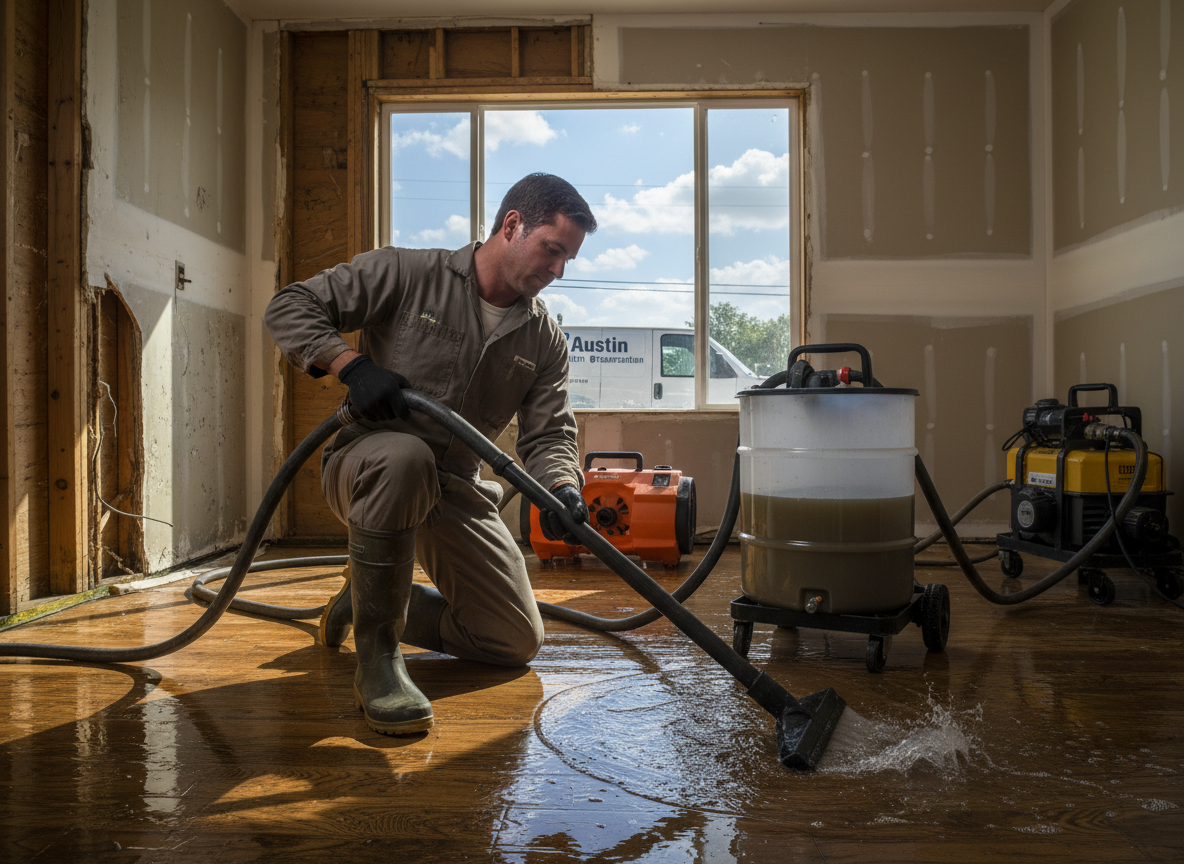
Elgin sits east of Austin out past US-290, a mix of older brick-front homes near downtown Elgin and newer rural-lot properties with septic systems and long gravel driveways. When a pipe bursts or a roof gives out during a heavy spring storm, we're used to working on both ends of that spectrum — tight in-town lots near Main Street and spread-out acreage properties where the well pump and septic field add extra wrinkles to a water loss.
Because Elgin straddles the Travis/Bastrop county line, a lot of the housing stock here is older slab-on-grade or pier-and-beam construction built before modern drainage codes caught up. That means water finds its way into crawlspaces and under flooring in ways that surprise homeowners. We've pulled soaked insulation from under century-old farmhouses near Old Austin-Elgin Highway and dried out newer builds off Hwy 95 the same week — the fixes look different depending on the foundation type.
We run 24/7, which matters in Elgin because storms roll through fast off the plains east of town and there isn't always a quick-response option nearby. Whether it's a slow leak that's been soaking a bedroom wall for weeks or a flash-flood situation near Piney Creek, we get equipment out and start extraction before mold has a chance to set up shop in the humidity.
Around Elgin
We regularly work near:
- 📍Downtown Elgin Historic District
- 📍Elgin City Park
- 📍Veterans Memorial Park
- 📍Elgin High School
- 📍Old Austin-Elgin Highway
- 📍Piney Creek
Water Damage Repair in Elgin — Local Notes
- •Many homes in Elgin's older core (near Main St and the historic district) are pier-and-beam, which means water damage often shows up in the crawlspace first — we check subfloor moisture there before assuming a room is dry.
- •Rural properties on the outskirts often rely on septic systems and well water; a failed line or backup requires different containment and disposal handling than a standard municipal-line leak.
- •Clay-heavy soil common around Elgin swells and shifts with rain, which can crack foundations and create new points where water intrudes after storms — something we watch for on repeat calls.
- •Summer humidity combined with sudden downpours means drywall and insulation can stay damp longer than homeowners expect, so we push extra drying time on jobs out here versus tighter urban builds.