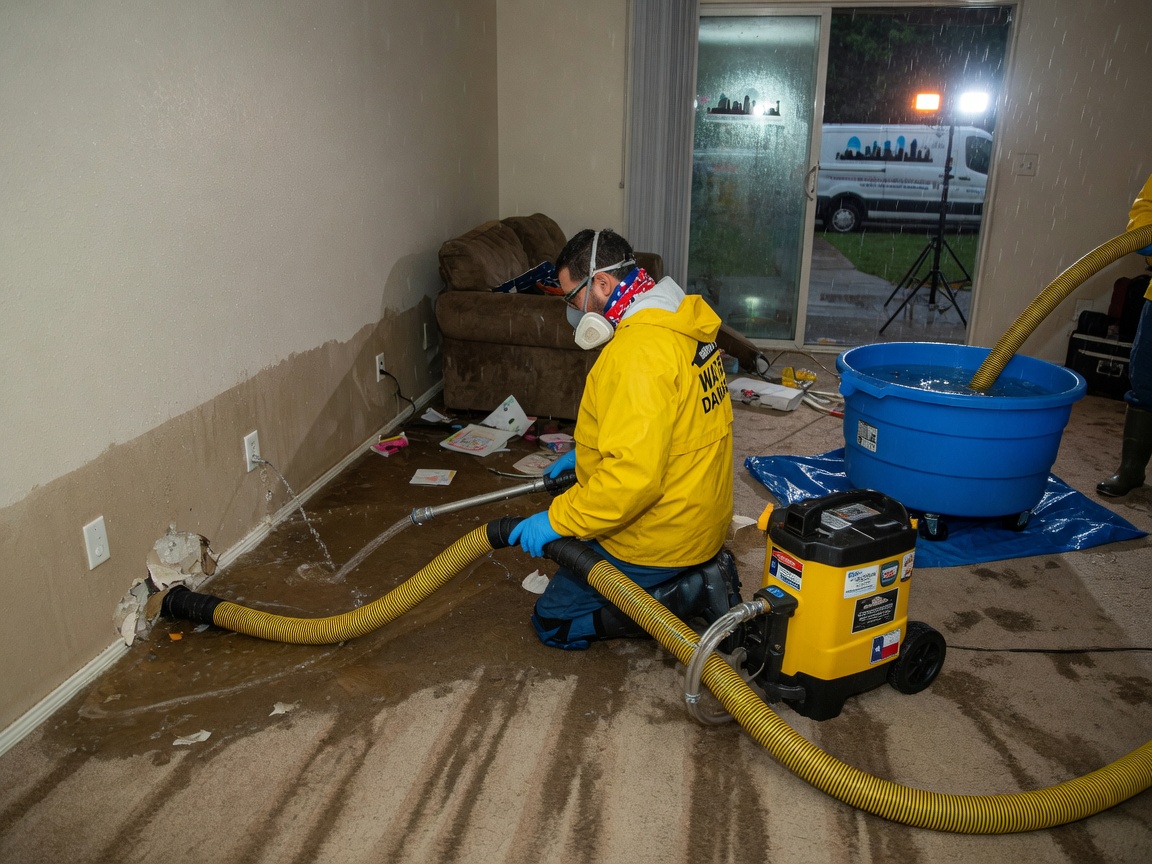
When water gets into flooring, cabinets, wall cavities, or subfloors, the first job is fast extraction. In Austin, that often means a burst supply line in a condo near Downtown, a failed appliance in Mueller, or storm-driven water after heavy rain in Travis County. Our focus is to remove standing water before it soaks into materials that can’t be dried in place, especially engineered wood, drywall, insulation, and laminated cabinet boxes. We also pay attention to how the water entered, because clean water, gray water, and flood water all change the cleanup approach and what materials should be removed right away.
Emergency water extraction is not just about a wet/dry vacuum. On real jobs, we use the right size extraction heads for carpet, padding, tile grout lines, and uneven concrete, then check for hidden moisture in base plates, toe kicks, and wall cavities. Austin’s hot humid summers can slow natural drying and make odors and microbial growth show up quickly if water sits too long. In older homes around Hyde Park, Clarksville, and Travis Heights, we also watch for tighter crawlspaces, older trim profiles, and delicate plaster or hardwood that can be damaged by aggressive extraction or by over-wetting during cleanup.
Flood damage repair and emergency extraction also have code and safety implications. If water has reached electrical outlets, low wall sockets, breaker panels, or HVAC closets, those areas need to be treated as a safety issue before anyone starts restoring finishes. Around Westlake, Barton Hills, Zilker, and East Austin, we often see mixed materials and additions where water can travel farther than it appears on the surface. The practical goal is to stop the spread, document what’s affected, and remove only what needs to come out so the structure can be dried correctly. That saves time, helps preserve materials, and reduces the chance of avoidable tear-out later.
In neighborhoods near Lady Bird Lake, Barton Springs Pool, Zilker Park, or the University of Texas Tower, storm runoff, roof leaks, and plumbing backups can all present differently, but they need the same disciplined response: extract, inspect, and stabilize. We work 24/7 because water damage doesn’t wait for business hours, and the first few hours matter most. The safest path is to get the water out, identify the source if it’s still active, and separate what can be dried from what has to be removed. That’s the difference between a controlled repair and a much larger loss.
Emergency Water Extraction Services We Offer
✓Standing Water Removal
Fast removal of visible water from floors, hallways, bathrooms, and living areas. This is the first step when you need to stop water from soaking deeper into flooring and framing.
✓Carpet and Pad Extraction
Deep extraction for saturated carpet and padding, including edges and seams where moisture hides. This helps reduce wicking into baseboards and drywall.
✓Hard Surface Water Extraction
Removal of water from tile, concrete, laminate, and other hard surfaces where liquid can collect in joints, transitions, and low spots. Useful after supply line failures and storm intrusion.
✓Floodwater Cleanup Preparation
Initial extraction and stabilization for flood-affected spaces so the area can be sorted for safe removal, cleaning, and drying. Best used when exterior water or contaminated water has entered the property.
✓Cabinet and Baseboard Moisture Removal
Targeted extraction around kitchens, baths, and utility rooms where water often hides under toe kicks and behind trim. This helps prevent hidden swelling and odor issues.
✓Wall Cavity Moisture Assessment
Inspection and moisture checks after extraction to find water that has moved behind drywall or into insulation. This helps determine whether controlled removal is needed before drying can work.
Emergency Water Extraction Cost in Austin, TX
| Service | Typical Range | What Affects It |
|---|---|---|
| Small Residential Water Extraction | $150–$400 | Moves with room size, floor type, and how much water must be removed. |
| Carpet And Pad Extraction | $200–$600 | Depends on square footage, saturation level, and whether furniture has to be moved. |
| Hard Surface Extraction | $175–$500 | Affected by layout, grout lines, transitions, and how far water spread under the surface. |
| Floodwater Extraction | $300–$900+ | Higher when water is contaminated, access is limited, or multiple rooms are affected. |
| Cabinet And Wall Edge Extraction | $200–$700 | Changes with toe-kick access, wall saturation, and whether materials need to be opened for moisture checks. |
Ranges are typical for Austin, TX and confirmed with an exact written quote before any work starts.
How it works
- 1
1. Emergency Arrival And Source Check
We get to the property quickly, assess the source of the water, and shut down active leaks when possible. If the problem involves plumbing, appliances, or storm intrusion, we identify the entry point before extraction starts so the water doesn’t keep coming back.
- 2
2. Standing Water Extraction
We remove visible water using extraction equipment matched to the surface and the amount of moisture present. That includes carpets, hard floors, and tight areas along baseboards, cabinet toe kicks, and low spots where water collects.
- 3
3. Moisture Mapping And Risk Check
After extraction, we check for hidden moisture in walls, subfloors, and adjacent rooms. This step matters in Austin homes where water can travel under flooring or through open-plan layouts before you see any damage.
- 4
4. Drying Plan And Material Decisions
We separate materials that can be dried from materials that need removal, then set up the next steps for stabilization and drying. If the water is contaminated, we use a more cautious approach and avoid spreading affected material into clean areas.
- 5
5. Cleanup Handoff And Repair Planning
Once the water is out and the area is stabilized, we outline what still needs attention so the repair can move forward in the right order. That may include drywall cuts, flooring replacement, or a return visit after drying is complete.
Pricing
Pricing depends on the amount of water, the affected materials, access, and whether the water is clean, gray, or flood-related. Small extraction jobs may be straightforward; larger losses with hidden moisture take more time and equipment.