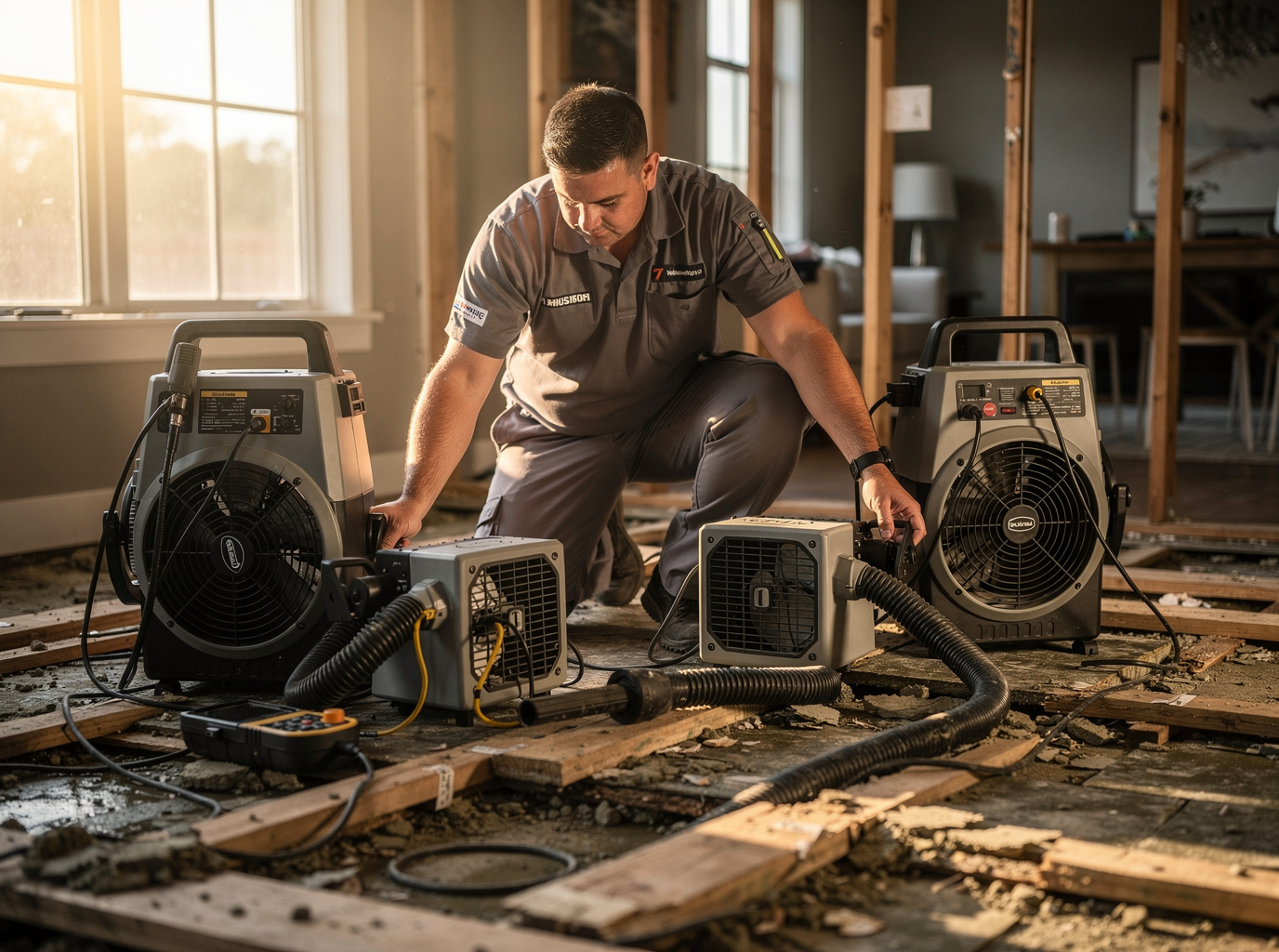
Structural drying is the part of water damage repair that happens after the visible water is gone but the building still holds moisture in places you cannot see. In Austin, that usually means drywall, base plates, hardwoods, cabinets, insulation, and the underside of subfloors after a supply-line break, appliance leak, roof intrusion, or flood damage repair call. We set up the job to dry the structure, not just the surface, because trapping moisture behind finished materials can lead to swelling, odor, cupping, and microbial growth. In older homes around Hyde Park, Clarksville, and Travis Heights, we also watch for plaster, lath, and mixed-material assemblies that dry more slowly than newer framing.
A proper structural drying plan depends on the materials and the moisture path. Concrete slabs, engineered wood, solid hardwood, and paper-faced drywall all behave differently, and Austin’s hot humid summers can make a room feel dry while the framing is still holding too much moisture. We use targeted airflow, dehumidification, and controlled temperature to pull water out of cavities and assemblies, then check readings as the materials equilibrate. If water has wicked into lower wall sections or under cabinets near Barton Hills, Mueller, or Westlake, we may need to remove small sections of wet material so the structure can dry from the inside out instead of sealing moisture behind finish surfaces.
There are edge cases where drying alone is not enough. If insulation is saturated, if base plates stayed wet long enough to swell, or if water reached hidden spaces near electrical pathways, those areas need a careful inspection before any rebuild starts. In parts of Downtown, East Austin, and South Congress, where mixed-use buildings and tighter access can slow airflow, the drying setup often takes more planning than the extraction itself. We also account for Travis County conditions and Austin’s mild winters versus humid spring and summer patterns, because outside air can help or hurt the process depending on the day. The goal is simple: dry the structure to a verifiable baseline so the repair holds up after the walls close back in.
Structural drying is also a code-conscious step in the recovery process. Before insulation, baseboards, flooring, or wall finishes are put back, the affected structure should be dry enough for the materials being installed and the assembly should not trap residual moisture. That matters in homes near Lady Bird Lake, Zilker Park, Barton Springs Pool, and the neighborhoods around the University of Texas Tower and the Texas State Capitol, where older construction and newer remodels often meet in the same building. We work with a 24/7 schedule because water does not wait for business hours, and the earlier a drying plan starts, the less likely it is that you will be dealing with warped trim, stuck flooring, or recurring odors later.
Structural Drying Services We Offer
✓Wall Cavity Drying
We dry wet wall assemblies after leaks, overflows, or seepage so moisture does not stay trapped behind drywall. This is especially important when water reached insulation or the lower wall plate.
✓Subfloor Drying
We target the layer under flooring when water has soaked through carpet, vinyl, hardwood, or tile underlayment. Drying the subfloor early helps prevent bounce, swelling, and long-term odor.
✓Cabinet and Kickboard Drying
Kitchen and bath cabinets can hold moisture in toe kicks, particleboard bases, and toe spaces long after the surface looks dry. We dry these areas carefully to reduce swelling and delamination.
✓Hardwood and Engineered Floor Drying
We use controlled drying methods for wood floors so they release moisture without excessive cupping, crowning, or cracking. The approach depends on the floor type, the amount of water, and how long it sat.
✓Slab Moisture Drying
When water reaches a slab or slab-adjacent materials, we focus on the affected finishes and the edges where moisture can linger. This helps protect flooring installs and base materials from recurring dampness.
✓Containment and Dehumidification Setup
For larger losses, we isolate the affected area and build the right airflow and dehumidification plan. That keeps drying efficient in open layouts and in tighter spaces with limited ventilation.
Structural Drying Cost in Austin, TX
| Service | Typical Range | What Affects It |
|---|---|---|
| Small Room Structural Drying | $300–$900 | Moves with room size, material type, and whether drying can stay localized or needs containment. |
| Wall Cavity Drying | $250–$800 | Depends on how many wall sections were wet, whether insulation is affected, and how much access is needed. |
| Subfloor Drying | $400–$1,200 | Changes with flooring type, how much water reached the underlayment, and whether sections must be opened for airflow. |
| Hardwood Floor Drying | $500–$1,500 | Driven by floor type, how long water sat, and whether boards can be saved without major removal. |
| Cabinet Drying | $200–$700 | Affected by cabinet construction, particleboard damage, and how much moisture reached toe kicks or bases. |
| Large Loss Or Multi-Room Drying | $1,500–$5,000+ | Usually tied to flood damage repair, multiple affected materials, and extended equipment time. |
Ranges are typical for Austin, TX and confirmed with an exact written quote before any work starts.
How it works
- 1
Inspect And Map Moisture
We identify what got wet, how far moisture traveled, and which materials can be dried in place versus which ones need removal. That includes checking hidden edges, corners, and wall bases that often hold water after the visible puddle is gone.
- 2
Extract And Prepare The Structure
Standing water is removed first, then we open up the affected assembly only as needed to let trapped moisture escape. The setup is adjusted for the building materials so the drying equipment works on the right layer, not just the room air.
- 3
Dry With Airflow And Dehumidification
We place air movers and dehumidifiers to create a controlled drying environment. In Austin’s humid months, this balance matters because pushing air alone can speed evaporation without actually removing the moisture from the structure.
- 4
Monitor, Adjust, And Verify
We recheck the structure as it dries and adjust equipment placement, temperature, and run time based on readings. When the materials reach a dry baseline, the area can move into repairs and rebuild with less risk of hidden moisture issues.
Pricing
Pricing for structural drying depends on the size of the affected area, how deep the water traveled, the materials involved, and how long the structure stayed wet. Smaller room dry-outs cost less than multi-room or flood-related drying jobs.