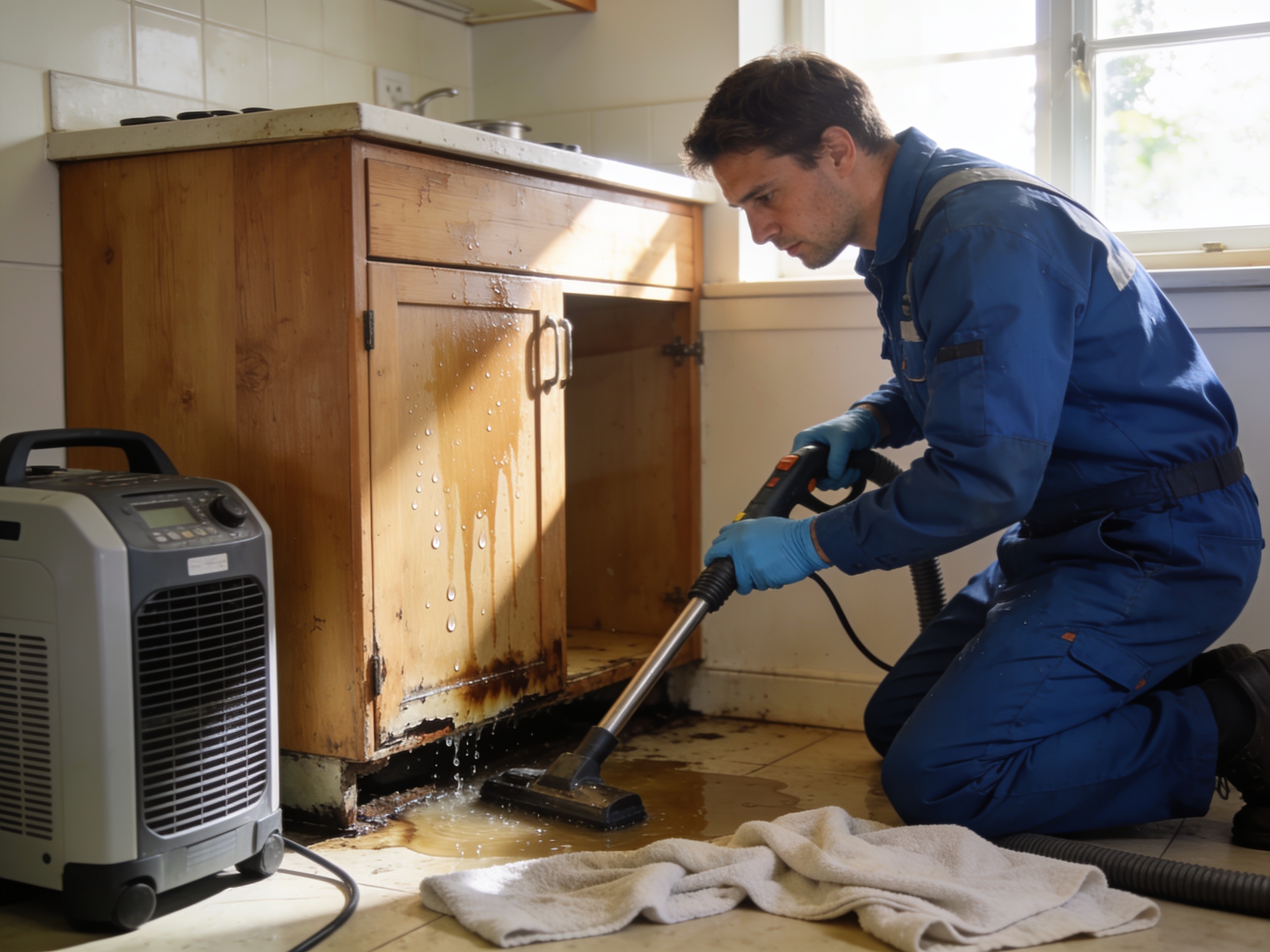
Most Austin kitchens and bathrooms — from the older bungalows in Hyde Park and Clarksville to newer builds near Mueller — use particleboard or MDF cabinet boxes with a thin veneer or laminate face. That material soaks up water like a sponge and swells within hours, not days. By the time you notice the toe kick bulging or a cabinet door won't close square, the damage is usually already past the point of drying out and needs cut-out and rebuild, not just dehumidification. We see this constantly under kitchen sinks, behind dishwashers, and along bathroom vanities where a slow supply line leak went unnoticed for weeks.
Solid wood cabinets fare better but aren't immune — water wicks into end grain and joints, causing swelling, joint separation, and finish blistering that shows up along the bottom rail first. Once we've extracted standing water and pulled baseboards, we inspect the sub-floor and wall cavity behind the cabinet run, because cabinet damage is often just the visible symptom of a bigger moisture problem in the wall or subfloor. Skipping that step is the number one reason cabinet repairs fail months later — mold grows behind an intact-looking cabinet back panel where nobody checked.
There's no city or state code that specifically regulates cabinet materials after water intrusion, but if the water event involved sewage backup or gray water (a common issue with older East Austin plumbing), the affected cabinet material should be treated as contaminated and removed rather than dried, per standard IICRC water damage category guidelines. We flag category 2 and 3 water events during our initial walkthrough so you know upfront whether you're looking at a dry-and-restore job or a demo-and-rebuild job — the cost difference is significant and it's worth knowing early.
Insurance adjusters frequently push for cabinet refacing instead of full replacement to save money, but refacing over swollen substrate just hides the problem and locks in mold risk. We document moisture readings and photos at every stage specifically so you have evidence to push back on an adjuster who's trying to under-scope the job.
Cabinet Water Damage Repair Services We Offer
✓Swollen Cabinet Box Repair
We assess whether swollen particleboard or plywood boxes can be dried, clamped, and refinished, or whether the panel needs full replacement.
✓Base Cabinet Removal and Replacement
Complete tear-out of water-damaged base cabinets and toe kicks, matched to your existing cabinet line where possible or rebuilt from scratch.
✓Under-Sink Cabinet Mold Remediation
Targeted mold treatment and material removal for the most commonly affected spot in any kitchen or bathroom — the cabinet floor under the sink.
✓Cabinet Drying and Dehumidification
On-site air movers and dehumidifiers set up to save cabinets that are wet but not yet delaminated, catching the problem before it becomes a rebuild.
✓Vanity Water Damage Repair
Bathroom vanity repair or replacement after supply line leaks or overflow, including check of the wall cavity behind the vanity.
✓Cabinet Refinishing After Water Exposure
Sanding, sealing, and refinishing solid wood cabinets where the structure is sound but the finish has blistered or discolored.
✓Insurance Documentation for Cabinet Claims
Moisture mapping, photo documentation, and scope notes to support your claim and push back on under-scoped adjuster estimates.
Cabinet Water Damage Repair Cost in Austin, TX
| Service | Typical Range | What Affects It |
|---|---|---|
| Emergency water extraction visit | $250–$600 | Depends on water volume and how many rooms are affected |
| Cabinet drying (salvageable cabinets) | $150–$450 | Per cabinet run; equipment rental time factors in |
| Under-sink cabinet floor replacement | $200–$500 | Material match and mold remediation add cost |
| Full base cabinet run replacement | $1,200–$4,500+ | Driven by linear footage, material grade, and custom vs stock cabinets |
| Bathroom vanity replacement | $400–$1,800 | Countertop and plumbing reconnection change the range |
| Mold remediation add-on | $300–$1,200 | Scope depends on square footage and containment needs |
Ranges are typical for Austin, TX and confirmed with an exact written quote before any work starts.
How it works
- 1
Emergency Response And Water Extraction
We're on call 24/7 across Travis County — the first move is always stopping active water and extracting standing water before it soaks further into cabinet substrate.
- 2
Moisture Mapping And Damage Assessment
We check moisture content in the cabinet material, the wall behind it, and the subfloor beneath it, and categorize the water source (clean, gray, or contaminated).
- 3
Dry, Salvage, Or Demo Decision
We tell you honestly which cabinets can be dried and saved versus which need to be cut out, based on swelling, delamination, and how long the wood sat wet.
- 4
Drying, Removal, Or Rebuild
Air movers and dehumidifiers go in for salvageable units; damaged sections are removed and either rebuilt to match or replaced with new cabinetry.
- 5
Final Inspection And Documentation
We confirm dry readings before closing anything back up, and hand you photo and moisture documentation for your records or insurance claim.
Pricing
Cabinet water damage jobs in Austin range from a same-day drying visit to a full cabinet run replacement — we give you an upfront, itemized quote after inspection, not a phone-quote guess.