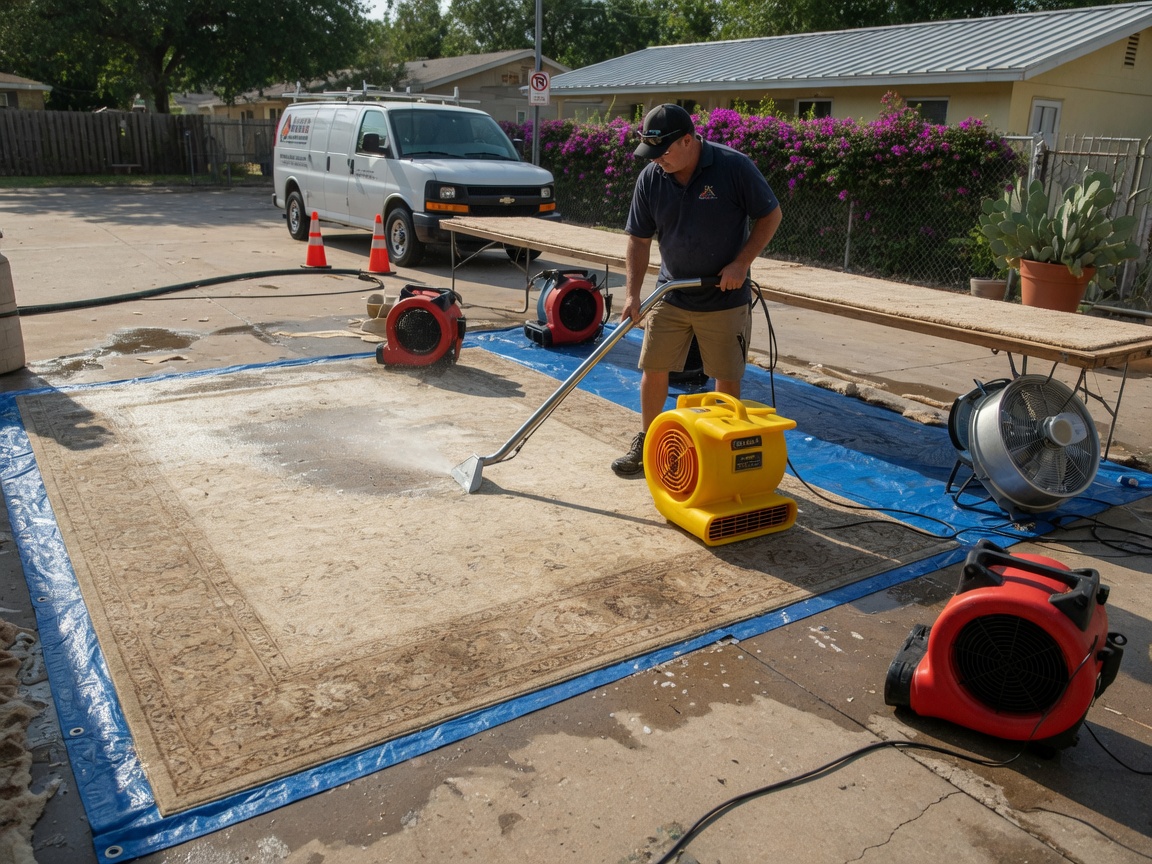
Carpet that's been sitting wet for more than a few hours is already a different problem than carpet that just got splashed. Once water travels down through the face fibers into the pad and subfloor, you're not just drying carpet anymore — you're drying a three-layer system where each layer holds moisture differently. Nylon and polyester face fibers wick fast but release water quickly with air movement; the pad underneath is the real culprit, acting like a sponge that stays saturated long after the surface feels dry to the touch. We check moisture with a probe or meter at the pad and subfloor level, not just the surface, because that's where mold actually starts.
In Austin's climate, humidity is the enemy that makes carpet drying harder than it looks on paper. Hot, humid summers mean the ambient air is often already near saturation, so opening windows and running a box fan doesn't pull moisture out — it just moves humid air around. We use commercial dehumidifiers paired with air movers to actively drop the grain depression in the room, which is the only way to get carpet and pad dry within the roughly 24-48 hour window before mold colonies can establish. During the mild winters we still see slow leaks and burst pipes cause the same problem, just with less humidity working against us.
There are cases where drying in place isn't the right call, and a good technician tells you that upfront instead of running fans for three days on carpet that should've been pulled. Carpet affected by category 3 water (sewage backup, floodwater from outside) should not be dried and reused — the pad especially needs to be removed and disposed of regardless of how it looks. Carpet with delaminating backing, jute-backed carpet in older homes around Hyde Park and Clarksville, or carpet that's been wet for several days before we're called usually falls into replace-not-dry territory. We'll tell you honestly which situation you're in before we start billing drying time.
Tack strips, baseboards, and the subfloor itself also need attention that pure carpet drying skips. Wood subfloors under carpet in older Travis Heights and Zilker bungalows can cup or crown if they're not dried alongside the carpet, and we'll pull carpet edges to check and dry underneath rather than just running equipment over the top. Skipping this step is the number one reason homeowners get a callback for odor or buckling weeks after a job looked finished.
Carpet Drying Services We Offer
✓Emergency Carpet Water Extraction
Truck-mounted or portable extraction to pull standing water out of carpet and pad within the first hours after a leak or flood, when it matters most.
✓Carpet Pad Replacement
When pad has absorbed too much water or contaminated water, we pull and replace it rather than trying to dry a total loss.
✓Structural Drying with Air Movers and Dehumidifiers
Calibrated placement of air movers and commercial dehumidifiers to dry carpet, pad, and subfloor together, not just the surface.
✓Moisture Mapping and Monitoring
Daily moisture readings at carpet, pad, and subfloor levels so drying stops exactly when the numbers say it's done, not on a guess.
✓Subfloor Drying Under Carpet
Pulling carpet edges to dry wood or concrete subfloors, common in older Austin homes where cupping or odor can develop if this step is skipped.
✓Odor and Antimicrobial Treatment
Antimicrobial application on pad and subfloor after drying to address bacteria growth from water intrusion, reducing musty odor risk.
✓Category 3 Water Carpet Removal
Safe removal and disposal of carpet and pad affected by sewage backup or contaminated floodwater that cannot be safely dried and reused.
Carpet Drying Cost in Austin, TX
| Service | Typical Range | What Affects It |
|---|---|---|
| Single Room Carpet Extraction And Drying | $200–$500 | Depends on room size and how saturated the pad is |
| Whole-House Carpet Drying (Clean Water) | $800–$2,500 | Varies with square footage and number of rooms affected |
| Carpet Pad Replacement | $1–$2 per sq ft | Material grade and disposal of contaminated pad add cost |
| Category 3 Carpet Removal And Disposal | $300–$900 | Contaminated carpet must be removed, not dried |
| Subfloor Drying Add-On | $150–$600 | Depends on subfloor material and how far moisture traveled |
Ranges are typical for Austin, TX and confirmed with an exact written quote before any work starts.
How it works
- 1
24/7 Emergency Call And Assessment
We take the call anytime, day or night, and get a technician out to assess water category, how long it's been wet, and whether drying-in-place is realistic.
- 2
Extraction
We extract as much free water as possible from carpet and pad before drying equipment goes in, since dehumidifiers work far more efficiently once bulk water is gone.
- 3
Equipment Placement And Moisture Mapping
Air movers and dehumidifiers are placed based on room size and moisture readings, not a flat rate of equipment per square foot.
- 4
Daily Monitoring
We return to check moisture levels and adjust equipment, so drying time is based on actual readings rather than a fixed number of days.
- 5
Final Verification
Once pad, carpet, and subfloor readings hit dry standard, we document it and clear the equipment out, with antimicrobial treatment applied where needed.
Pricing
Most carpet drying jobs in Austin run in the low hundreds to just over a thousand dollars depending on square footage, water category, and how many rooms need equipment — we give an upfront quote after the initial assessment, before any drying equipment goes in.