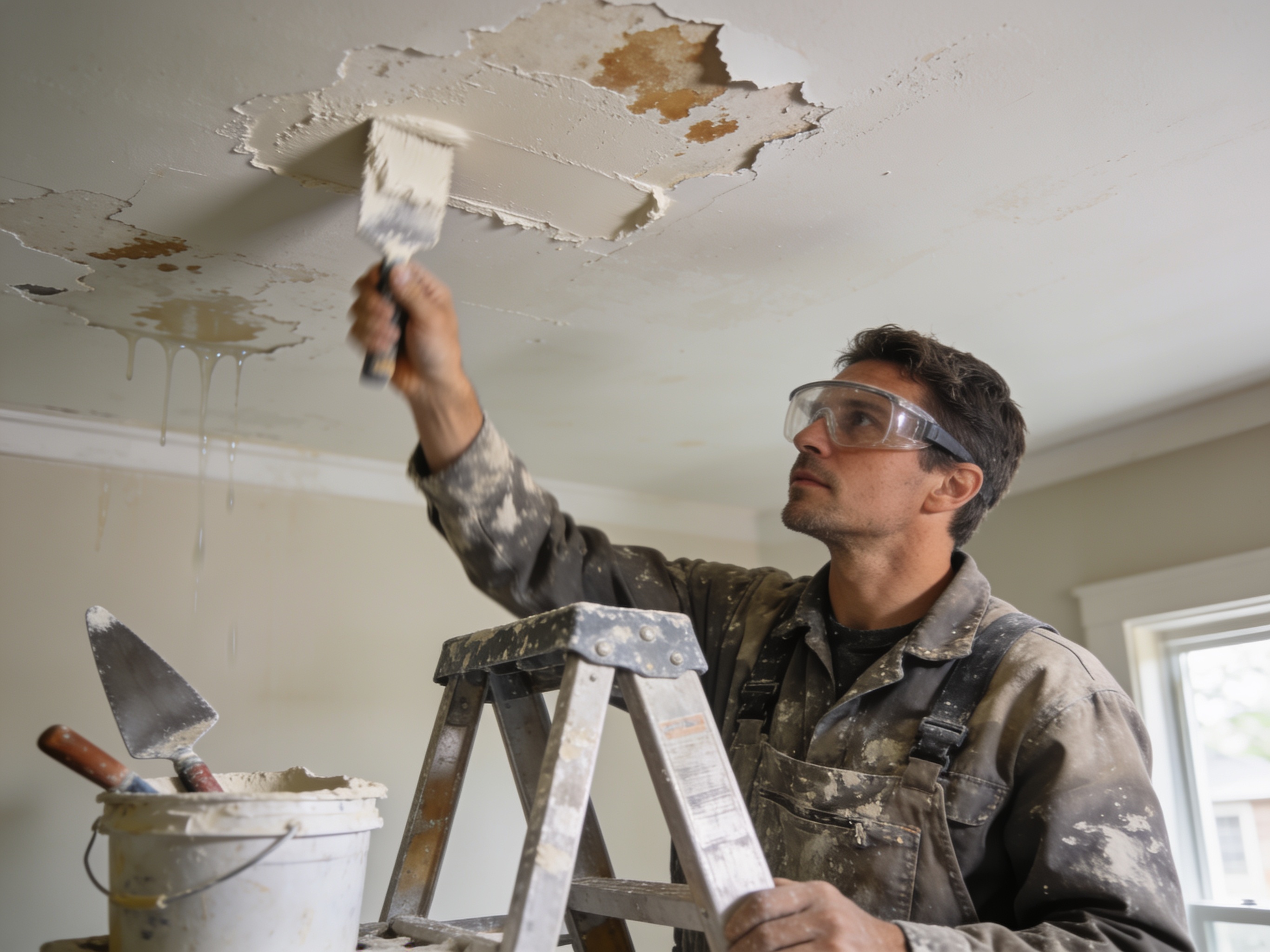
Ceiling water damage almost never stays where you first see it. By the time a brown ring shows up on drywall in a Hyde Park bungalow or a Mueller townhome, water has usually been traveling along a truss or joist for hours, sometimes days, before gravity pulled it down to the lowest point. We've opened up ceilings that looked like a coin-sized stain on the surface but had saturated insulation running six feet across the attic. Cutting the drywall open early is almost always cheaper than waiting, because wet gypsum board loses structural integrity fast and sagging ceilings can fail without warning — we've seen this happen in older Travis Heights and Clarksville homes with original plaster-and-lath systems that hold moisture longer than modern drywall.
The material matters a lot here. Textured popcorn ceilings common in Austin homes built in the 70s-90s often contain asbestos if they haven't been remediated, so before we scrape or cut into an older ceiling in a Zilker or Barton Hills home we flag it and recommend testing if there's any doubt — this isn't something to guess on. Skim-coated or knockdown-textured ceilings are more forgiving for patch repairs since the texture is easier to blend. Popcorn ceilings, by contrast, are nearly impossible to feather-match, so full-panel or full-room replacement is often the more honest recommendation even if it costs more upfront.
Source matters as much as symptom. A stained ceiling under an upstairs bathroom is a different job than one under a roof valley that leaked during a spring thunderstorm, or one below an AC unit that's been condensing and dripping for weeks in Austin's humid summers. We trace the source before we touch drywall — repairing the ceiling without fixing the plumbing, roofing, or HVAC condensate line means you'll be paying us to do the same job again next season. In condo or duplex units near Downtown or South Congress, ceiling damage frequently originates in the unit above, which adds a layer of coordination with HOAs or neighboring owners that we help walk clients through.
Hidden mold growth is the edge case that catches people off guard. Ceiling cavities trap humidity, and Austin's hot, humid summers give mold exactly the conditions it needs once drywall paper gets wet and stays wet behind an unopened ceiling. If a stain has been there more than 48-72 hours, or if there's a musty smell with no visible growth, we recommend opening the ceiling for inspection rather than just painting over it — cosmetic fixes on top of hidden mold are one of the most common complaints we hear from homeowners who called someone else first.
Ceiling Water Damage Repair Services We Offer
✓Ceiling Stain Removal and Repainting
For minor, isolated leaks that have dried out completely — we seal the stain with a proper stain-blocking primer and repaint to match, without unnecessary demo.
✓Drywall and Plaster Ceiling Patching
Cutting out saturated or sagging sections and replacing with matched drywall or, in older Travis Heights and Clarksville homes, plaster-compatible repair techniques.
✓Sagging Ceiling Structural Repair
When joists, trusses, or furring strips have taken on water weight, we reinforce or replace framing before any cosmetic work goes back up.
✓Popcorn Ceiling Water Damage Repair
Careful handling of textured ceilings, including testing recommendations on older homes, since texture-matching a small patch is rarely a clean fix.
✓Ceiling Mold Remediation and Inspection
Opening affected sections to check for hidden mold growth behind drywall, especially where a leak sat unaddressed during Austin's humid months.
✓Roof Leak-Related Ceiling Repair
Coordinating the ceiling fix with the roofing repair or replacement so you're not patching drywall under a roof that's still letting water in.
✓Bathroom and Kitchen Ceiling Leak Repair
Targeted repair for the most common ceiling damage source — plumbing leaks from the unit or room above, including condo and duplex situations near Downtown.
✓Emergency Ceiling Collapse Response
24/7 response when a ceiling has already come down or is actively sagging with standing water, to protect people and belongings first.
Ceiling Water Damage Repair Cost in Austin, TX
| Service | Typical Range | What Affects It |
|---|---|---|
| Minor Stain Cleaning And Repaint | $150–$400 | Isolated, dried-out stain with no structural damage |
| Drywall Patch Repair (Small Section) | $300–$800 | Depends on ceiling height, texture matching, and access |
| Full Ceiling Section Replacement | $800–$2,500 | Larger area, popcorn texture, or plaster ceilings cost more |
| Structural Framing Repair | $1,000–$3,500+ | Scope depends on how many joists/trusses are affected |
| Mold Remediation (If Found Behind Ceiling) | $500–$3,000+ | Varies widely with extent of hidden growth |
| Emergency After-Hours Response | Varies | Available 24/7; scope determines final cost |
Ranges are typical for Austin, TX and confirmed with an exact written quote before any work starts.
How it works
- 1
Source Identification
We trace the leak to its actual source — roof, plumbing, HVAC condensate, or the unit above — before touching the ceiling itself.
- 2
Moisture Mapping
Using moisture meters, we map how far water has traveled across the ceiling cavity and into adjoining walls or attic insulation.
- 3
Demo And Drying
Damaged drywall, plaster, or insulation is removed and the area is dried thoroughly with air movers and dehumidifiers before any rebuild starts.
- 4
Structural And Mold Check
Framing is inspected for rot or weakness, and any hidden mold is remediated before the ceiling is closed back up.
- 5
Rebuild And Finish
New drywall or plaster is installed, textured to match, primed, and painted so the repair blends into the rest of the ceiling.
Pricing
Most ceiling water damage repairs in Austin fall in a mid-range once you factor in drying time, drywall replacement, and paint matching — small stain touch-ups cost far less than a sagging ceiling with structural and mold concerns. We give upfront quotes after seeing the actual extent of the damage, not a phone estimate.