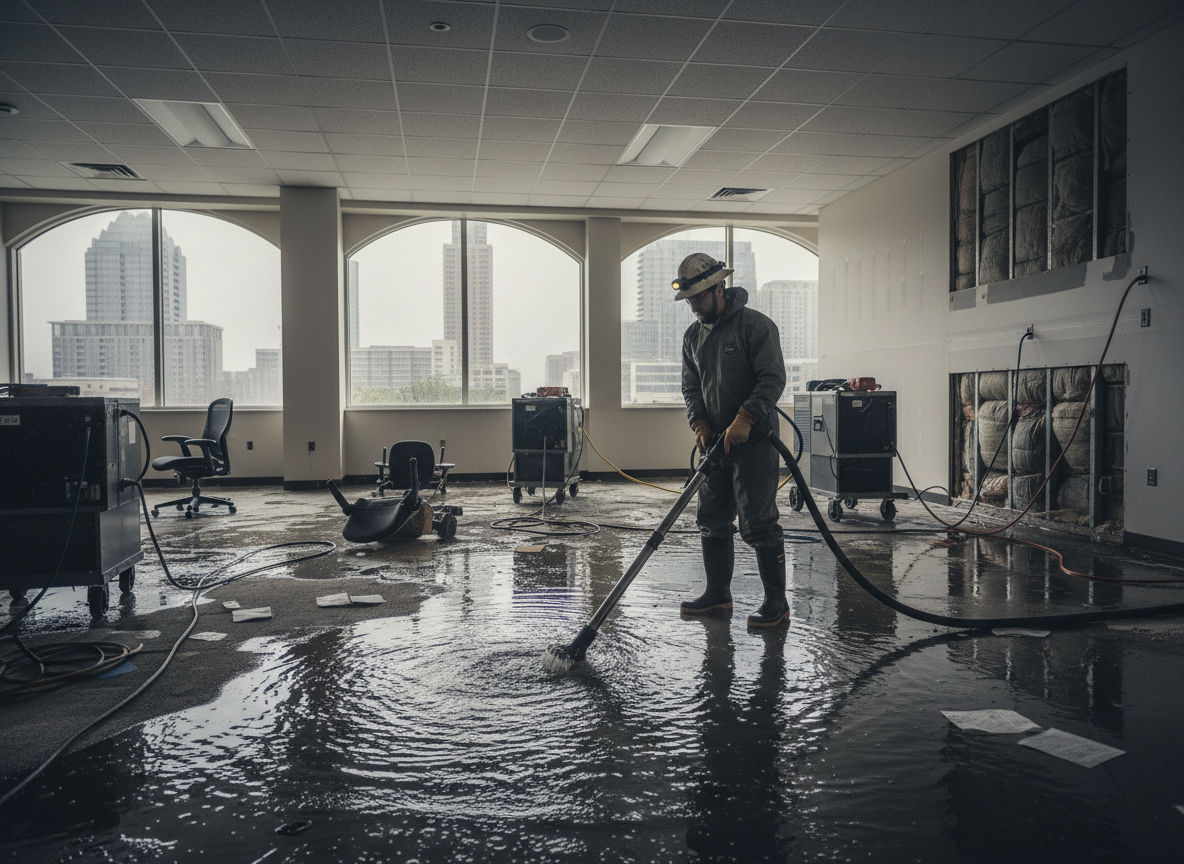
Commercial flood cleanup is a different animal than a residential job — you're dealing with larger square footage, often slab-on-grade construction with hidden plumbing chases, drop ceilings that hide saturation for days, and business owners who need doors open by Monday. We've pulled water out of retail spaces near South Congress with wicking into gypsum board three feet up, and cleared out flooded storage rooms in East Austin warehouses where pallets sat in standing water long enough to start delaminating cardboard into a slip hazard. The first two hours matter more than any other part of the job: extraction speed determines whether you're drying out carpet tile or replacing it.
In multi-tenant buildings downtown or near the Capitol, flooding often triggers shared-wall and shared-HVAC concerns — water in one suite can wick under a demising wall or get pulled into a rooftop unit's return air, spreading moisture (and eventually odor) to neighboring tenants. We coordinate with property managers on this constantly. Commercial leases also frequently require documentation for insurance and for the landlord's records, so we photograph moisture readings room by room and keep a log of equipment placement and run times, which matters if a dispute comes up later about scope or cause.
Austin's climate adds its own wrinkle: hot, humid summers mean any commercial space with an HVAC system running non-stop after a flood is fighting elevated ambient humidity almost year-round, which slows drying and raises mold risk within 24-48 hours if dehumidification isn't aggressive enough. Mild winters are more forgiving, but spring storms bring their own flash-flood risk near Lady Bird Lake and low-lying areas closer to Barton Springs, where basements and below-grade loading docks can take on water fast. We size drying equipment to the square footage and the building's HVAC load, not a generic per-room guess.
One code note worth knowing: commercial occupancies often fall under stricter fire-rated assembly requirements than residential, so if we're removing wet drywall near a rated wall or ceiling assembly, that has to be rebuilt to match the original rating — not just patched. We flag this upfront so building owners aren't surprised by a fire-marshal issue during re-inspection.
Commercial Flood Cleanup Services We Offer
✓Emergency Water Extraction
Truck-mounted extraction to pull standing water from retail floors, offices, and warehouse space before it wicks further into walls and subfloor.
✓Business Interruption Documentation
Room-by-room moisture logs, photos, and equipment run-time records built for insurance claims and landlord documentation.
✓Commercial Structural Drying
Industrial dehumidification and air movement sized to your building's square footage and HVAC load, not guesswork.
✓Ceiling Tile & Drop Ceiling Remediation
Removal and replacement of saturated ceiling tile and grid, checking for hidden pooling above the deck before it drips days later.
✓Server Room & Electrical Room Flood Response
Careful extraction and drying around sensitive equipment, with power isolated first and moisture checked before anything is re-energized.
✓Multi-Tenant & Shared-Wall Moisture Control
Containment and monitoring at demising walls and shared HVAC returns to keep flooding from spreading to neighboring suites.
✓Post-Flood Odor & Microbial Treatment
Antimicrobial application and odor control for commercial spaces where standing water sat long enough to start smelling before crews arrived.
Commercial Flood Cleanup Cost in Austin, TX
| Service | Typical Range | What Affects It |
|---|---|---|
| Emergency extraction (per commercial visit) | $500–$2,000 | Depends on square footage and depth of standing water |
| Structural drying (per day, equipment on site) | $300–$900/day | Number of dehumidifiers and air movers needed |
| Ceiling tile & grid replacement | $3–$8/sq ft | Grid damage and above-deck pooling add cost |
| Drywall removal & rebuild (rated assemblies) | $8–$18/sq ft | Fire-rated wall/ceiling assemblies cost more to rebuild correctly |
| Documentation & insurance reporting | Included with extraction service | Provided for claims and landlord records |
Ranges are typical for Austin, TX and confirmed with an exact written quote before any work starts.
How it works
- 1
Emergency Call & Dispatch
We're available 24/7, so a call after hours or over a weekend still gets a crew moving — commercial flooding doesn't wait for business hours and neither do we.
- 2
Site Assessment & Safety Check
We check electrical panels, floor loading, and any hazards before extraction starts, and map out which areas are structural versus contents-only.
- 3
Extraction & Equipment Placement
Truck-mounted extraction removes bulk water, then air movers and dehumidifiers get placed based on room size and materials affected.
- 4
Monitoring & Documentation
Daily moisture readings track drying progress and build the paper trail your insurance adjuster or landlord will want to see.
- 5
Reconstruction Handoff
Once materials read dry, we scope any drywall, flooring, or ceiling assembly work needed to bring the space back to code and ready for tenants.
Pricing
Commercial flood jobs price by square footage, water category, and how much material needs to come out — most Austin businesses get a walkthrough quote before any work starts.