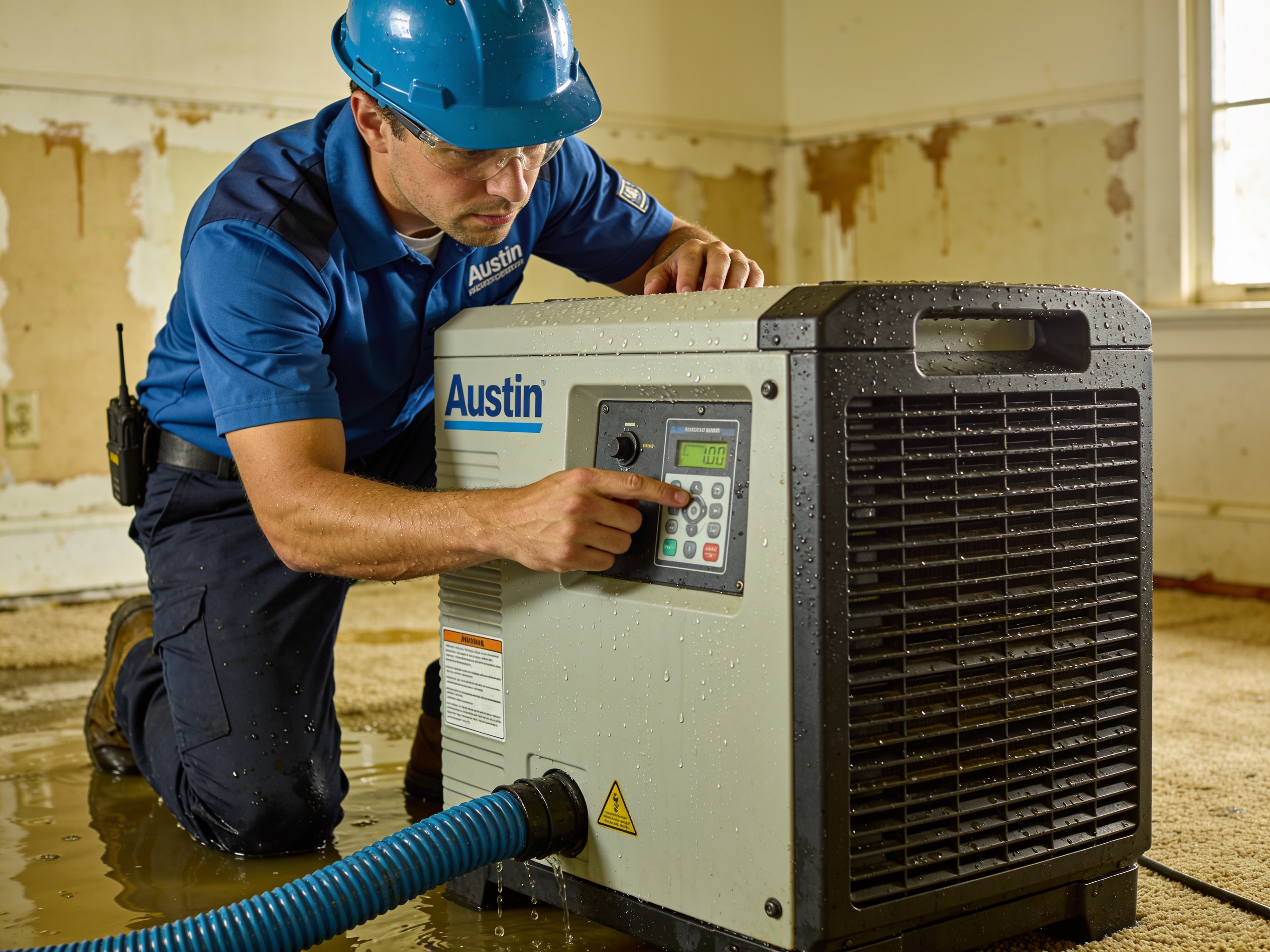
Dehumidification is the step homeowners skip and regret. Pulling standing water is only half the job — the moisture that's soaked into drywall, subfloor, and framing keeps evaporating into the air for days afterward, and if you don't drop the humidity in that space fast, you're growing mold on a timeline as short as 24-48 hours. In Austin's hot, humid summers this is worse than most places realize — ambient humidity outside is already high, so pulling moisture out of a structure and dumping it into a room with an open window or a weak AC unit just recharges the air. We run sealed drying chambers with commercial dehumidifiers matched to the cubic footage and material load of the space, not a box-store unit from the hardware aisle.
We size equipment using psychrometric readings — temperature, relative humidity, and grain depression — taken at intake and rechecked daily. That's how you know drying is actually working versus just running fans and hoping. A common mistake we see from other crews (and DIY jobs) is pulling equipment too early because the carpet feels dry to the touch; moisture meters routinely show subfloor and wall cavities still saturated 3-4 days after the surface feels fine. Pulling out early is the single biggest cause of hidden mold claims that show up 2-3 weeks later.
Older Austin homes in neighborhoods like Clarksville, Hyde Park, and Travis Heights often have original plaster walls, hardwood subfloor, or crawlspace foundations rather than slab — these hold moisture longer and dry unevenly, so we frequently need to drill small weep holes in baseboards or open wall cavities to get air movement behind the surface. Homes near Lady Bird Lake, Barton Springs, and Zilker Park with higher water tables also see slower ground-level drying after flooding, which can extend the dry-out timeline a day or two versus homes on higher ground near Westlake or Mount Bonnell.
We work directly with insurance adjusters and document every reading with time-stamped moisture logs, because that documentation is what supports a claim and protects you if mold shows up later and the carpet company or contractor tries to blame the drying process instead of the original flood event.
Dehumidification Services We Offer
✓Structural Drying Assessment
Moisture mapping with meters and thermal imaging to find wet materials behind walls and under flooring before drying equipment is even placed.
✓Commercial Dehumidifier Placement
Low-grain-refrigerant and desiccant units sized to the room's cubic footage and material saturation, not one-size-fits-all box units.
✓Air Movement & Structural Drying
Strategically placed air movers create the airflow pattern needed to pull moisture out of carpet pad, drywall, and subfloor evenly.
✓Crawlspace & Subfloor Drying
Targeted drying for pier-and-beam and crawlspace foundations common in older East Austin and Hyde Park homes, where moisture lingers longest.
✓Daily Moisture Monitoring
Psychrometric readings tracked and logged daily until materials hit dry-standard, with documentation you or your adjuster can review.
✓Mold Prevention Drying (Post-Flood)
Accelerated drying protocol for flood-affected properties near Lady Bird Lake and other low-lying areas where humidity and water table slow recovery.
✓Post-Construction Moisture Removal
Drying out fresh drywall mud, paint, or concrete pours that have trapped excess moisture before it causes warping or mold under new finishes.
Dehumidification Cost in Austin, TX
| Service | Typical Range | What Affects It |
|---|---|---|
| Moisture assessment | $100–$250 | Often waived if you move forward with drying services |
| Dehumidifier rental (per day) | $75–$150 | Depends on unit size and how many rooms need coverage |
| Air mover (per day, each) | $25–$50 | Number needed depends on square footage and material saturation |
| Full structural dry-out (per room, avg) | $500–$1,500 | Varies with drying days needed, material type, and whether wall cavities require access |
| Crawlspace/subfloor drying | $400–$1,200 | Older pier-and-beam homes typically take longer than slab foundations |
Ranges are typical for Austin, TX and confirmed with an exact written quote before any work starts.
How it works
- 1
Moisture Assessment
We inspect with moisture meters and thermal cameras to find every wet surface, not just what's visibly damp, and establish a baseline reading.
- 2
Equipment Placement
Dehumidifiers and air movers are placed and sized based on square footage, ceiling height, and material type — sealed off from outside humidity where possible.
- 3
Daily Monitoring & Adjustment
We return daily to take readings, reposition equipment, and open up cavities or baseboards if drying is stalling behind the surface.
- 4
Dry-Standard Verification
Drying continues until moisture content matches industry dry standards for the material type — not until it looks or feels dry.
- 5
Documentation Handoff
You get a full moisture log and drying report, useful for insurance claims and as proof of a completed dry-out if you sell the property later.
Pricing
Pricing depends on square footage, number of rooms affected, and how many drying days are needed — most residential jobs run a few days of equipment rental plus labor. We give upfront quotes after the moisture assessment, before any equipment goes in.