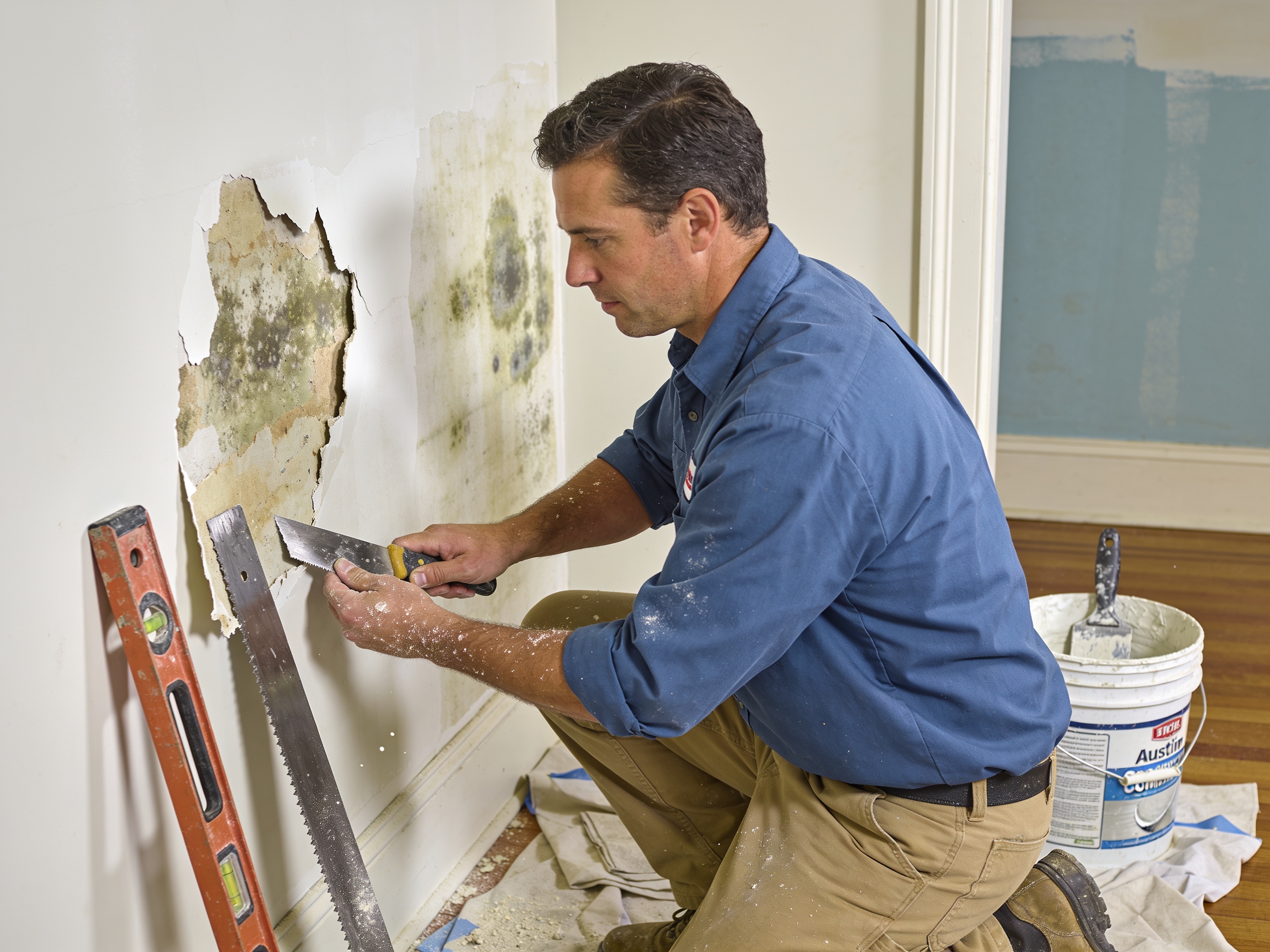
Drywall is the first thing to tell you there's a problem — a brown ring near Zilker or Travis Heights bungalow ceiling, a soft spot behind a Hyde Park kitchen sink wall, or paint that's bubbled after a slab leak downtown. The mistake most homeowners make is patching it before the framing and insulation behind it are actually dry. We use moisture meters and sometimes a thermal camera to map the wet zone before we cut anything, because paper-faced drywall wicks moisture sideways far past the visible stain — often 12-18 inches beyond what looks damaged.
In older East Austin and Clarksville homes we regularly find plaster-over-lath instead of modern drywall, which behaves differently when wet — it can look fine on the surface while the lath and keys underneath have failed. Newer builds in Mueller and around the University of Texas Tower area are almost all standard 1/2-inch gypsum board, which is faster to cut and replace but still needs the paper backing and any wet batt insulation removed to stop mold growth, since gypsum core itself can support mold within 24-48 hours of staying damp in our humid Austin summers.
Category 1 (clean water) drywall from a supply line can sometimes be dried in place with air movers and dehumidifiers if caught within a day or two. Category 2 or 3 water — sewage backup, groundwater flooding near Lady Bird Lake in heavy storms, or anything sitting more than 48 hours — means the affected drywall gets cut out and replaced, full stop, no shortcuts. We also flag load-bearing or fire-rated wall assemblies (common in shared-wall units near Downtown) since those require matching the original rated assembly, not just any drywall on the truck.
Repainting and texture matching is where a lot of DIY and lower-end repairs fall apart — Austin homes have a wide mix of orange peel, knockdown, and smooth finishes, and a mismatched texture patch is obvious in raking light. We texture-match and feather paint lines out to the nearest corner or ceiling break so the repair blends rather than becoming its own visible patch on the wall.
Drywall Water Damage Repair Services We Offer
✓Moisture Mapping & Cutout
We test walls and ceilings with moisture meters before cutting, so demo is limited to actually saturated drywall instead of guesswork.
✓Ceiling Drywall Repair
Sagging or stained ceilings from roof leaks or upstairs bathroom overflows — common in two-story Westlake and Barton Hills homes.
✓Mold-Contaminated Drywall Removal
Safe removal and bagging of drywall with visible mold growth, with the cavity cleaned and dried before any new board goes up.
✓Texture & Paint Matching
Orange peel, knockdown, or smooth finish matched and blended into the surrounding wall so the patch doesn't stand out.
✓Baseboard & Trim Reinstallation
Removing and reinstalling baseboards and trim cleanly during cutout so the finished repair looks original, not patched.
✓Insurance Documentation & Photos
Detailed photos, moisture readings, and cut-line documentation to support your homeowner's insurance claim.
✓Full-Room Drywall Replacement
For rooms with extensive flood damage — floor-to-ceiling replacement including insulation swap, not just spot patches.
Drywall Water Damage Repair Cost in Austin, TX
| Service | Typical Range | What Affects It |
|---|---|---|
| Small Ceiling Or Wall Patch (under 4 sq ft) | $250–$550 | Size of cutout, texture complexity, ceiling height |
| Standard Room Wall Section Repair | $500–$1,500 | Number of walls affected, insulation replacement needed |
| Full Room Drywall Replacement | $2,000–$5,500+ | Square footage, ceiling vs. wall work, mold remediation |
| Mold-Affected Drywall Removal | $400–$1,200 | Extent of mold growth, containment requirements |
| Emergency Drying (Air Movers/Dehumidifiers) | $150–$400/day | Number of units needed, how long drying takes |
Ranges are typical for Austin, TX and confirmed with an exact written quote before any work starts.
How it works
- 1
Moisture Testing
We map the wet area with a moisture meter to find the actual boundary of the damage before touching a wall.
- 2
Cutout & Removal
Damaged drywall, wet insulation, and any moldy paper backing are cut out and removed cleanly along stud lines.
- 3
Drying & Cleaning
Air movers and dehumidifiers dry the open cavity; any mold-affected framing is cleaned or treated before closing the wall.
- 4
Rebuild & Texture Match
New drywall is hung, taped, mudded, and textured to match the surrounding surface.
- 5
Paint & Final Walkthrough
Primed, painted, and blended into existing wall color, then walked through with you before we call it done.
Pricing
Small patch repairs run a few hundred dollars; full-room drywall replacement after a flood runs into the low thousands — we give you a firm number after seeing the extent of the damage.