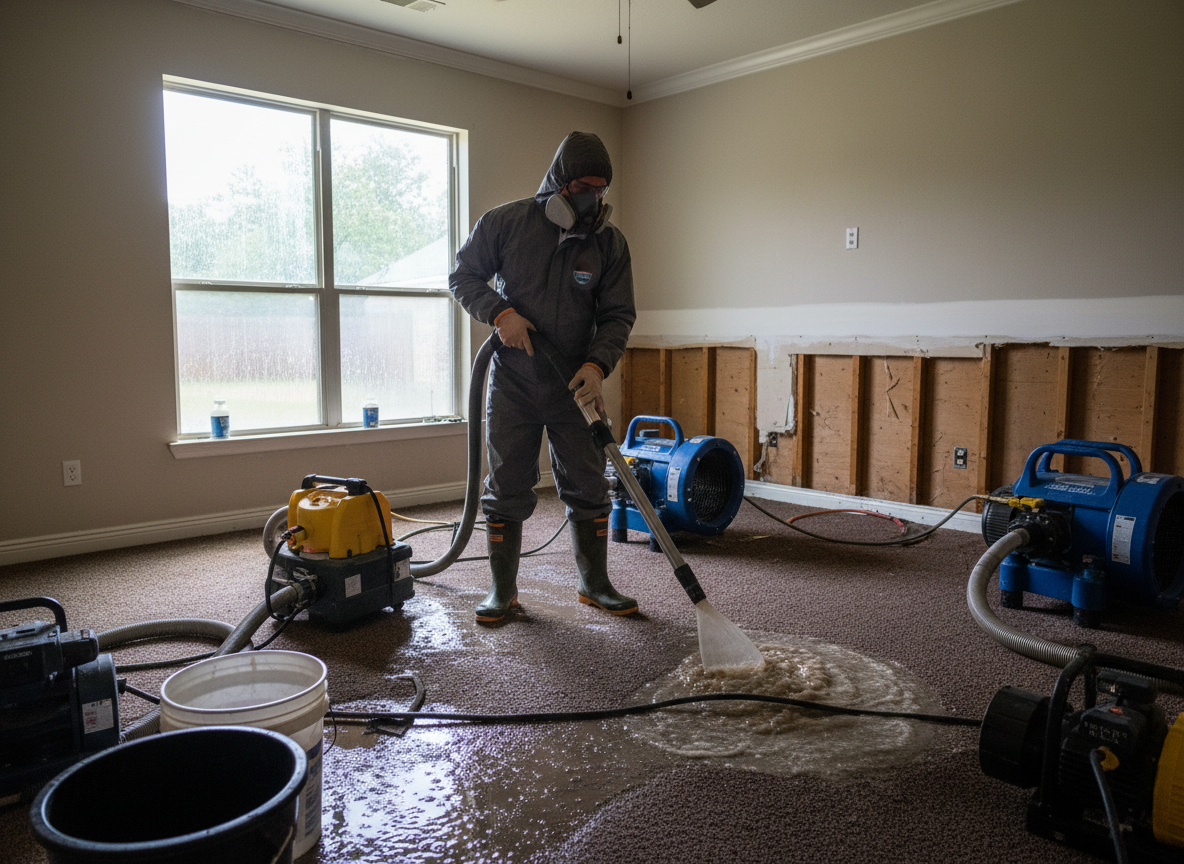
Flooding in Austin usually falls into two buckets: flash flooding from creek overflow after heavy spring storms, and slab leaks or burst pipes that flood a home from the inside. Both require different cleanup strategies. Creek and stormwater flooding near Barton Springs, Zilker Park, and low-lying stretches along Lady Bird Lake often brings in silt, bacteria, and contaminants, which pushes the job into Category 3 water territory — meaning porous materials like carpet pad, drywall, and baseboards usually can't be saved and need to be removed rather than just dried. We test water category on arrival with moisture meters and visual inspection before deciding what stays and what goes.
Older homes in Clarksville, Hyde Park, and Travis Heights often have plaster walls, original hardwood floors, and pier-and-beam foundations, all of which behave differently under water intrusion than modern slab construction. Pier-and-beam crawlspaces trap standing water and humidity long after the surface looks dry, which is a common callback we see when homeowners try to DIY the cleanup — the crawlspace keeps feeding moisture back into the floor joists for weeks. We check subfloor and crawlspace moisture levels as a standard part of any flood cleanup in these neighborhoods, not as an upsell.
Commercial flood cleanup around Downtown and South Congress comes with its own pressure: retail and restaurant spaces need fast turnaround to avoid lost revenue, and many buildings have shared walls or basement-level mechanical rooms where floodwater pools first. In these cases we prioritize extracting water from electrical and HVAC areas immediately to reduce the risk of secondary damage, then move to structural drying. Austin's hot, humid summers accelerate mold growth once materials stay wet for more than 24-48 hours, so timing matters more here than in drier climates.
A mistake we see often: people run box fans on standing water and call it handled. Surface drying is not structural drying. If wall cavities, subfloor, or insulation stay wet, mold colonizes inside materials you can't see, and that becomes a much bigger repair. Anywhere floodwater has touched electrical outlets or panels, we recommend a licensed electrician inspect before power is restored — we flag this but don't perform electrical work ourselves.
Flood Water Cleanup Services We Offer
✓Emergency Water Extraction
Truck-mounted and portable extraction removes standing water fast, which is the single biggest factor in limiting how much material has to be replaced afterward.
✓Structural Drying and Dehumidification
Industrial air movers and dehumidifiers dry wall cavities, subfloor, and framing, not just visible surfaces, which matters most during Austin's humid summer months.
✓Contaminated Floodwater Cleanup
For creek overflow or sewage backup situations, we remove and dispose of contaminated porous materials safely rather than attempting to dry and save them.
✓Carpet and Flooring Removal
Waterlogged carpet, pad, and laminate flooring get pulled and disposed of when they can't be safely dried, preventing hidden mold growth underneath.
✓Drywall and Baseboard Removal
We cut and remove flood-damaged drywall at the appropriate height to stop wicking moisture, then prep the wall for rebuild.
✓Crawlspace and Pier-And-Beam Drying
Common in older Hyde Park and Clarksville homes, this targets moisture trapped under the house that surface drying never reaches.
✓Commercial Flood Response
Fast-turnaround cleanup for restaurants, retail, and office space around Downtown and South Congress, prioritizing electrical and mechanical areas first.
Flood Water Cleanup Cost in Austin, TX
| Service | Typical Range | What Affects It |
|---|---|---|
| Emergency water extraction (small area) | $300–$800 | Depends on square footage and depth of standing water |
| Structural drying (per room) | $500–$1,500 | Varies with how long water sat and number of air movers/dehumidifiers needed |
| Contaminated floodwater cleanup | $1,000–$4,000+ | Category 3 water requires removal of porous materials, driving cost up |
| Crawlspace drying (pier-and-beam) | $600–$2,000 | Access difficulty and moisture extent under the home affect price |
| Drywall/baseboard removal and disposal | $3–$6 per sq ft | Height of removal and disposal volume affect final cost |
Ranges are typical for Austin, TX and confirmed with an exact written quote before any work starts.
How it works
- 1
Emergency Call And Dispatch
We're available 24/7, and for active flooding we prioritize getting a crew on-site quickly since every hour standing water sits raises the damage and cost.
- 2
Assessment And Water Categorization
We inspect the source, test water category (clean, gray, or contaminated), and check moisture levels in walls, floors, and crawlspaces to scope the real extent of the damage.
- 3
Extraction And Demolition
Standing water is extracted first, then any materials that can't be safely dried — soaked drywall, carpet pad, insulation — are removed.
- 4
Structural Drying
Air movers and dehumidifiers run until moisture meter readings confirm studs, subfloor, and framing are back to normal levels, not just until things look dry.
- 5
Documentation And Handoff
We document moisture readings and work performed for insurance purposes and walk you through what needs rebuild versus what's ready to go.
Pricing
Pricing depends heavily on how much water is involved, how long it sat, and whether contamination requires material removal — we give upfront quotes after an on-site assessment, not over the phone.