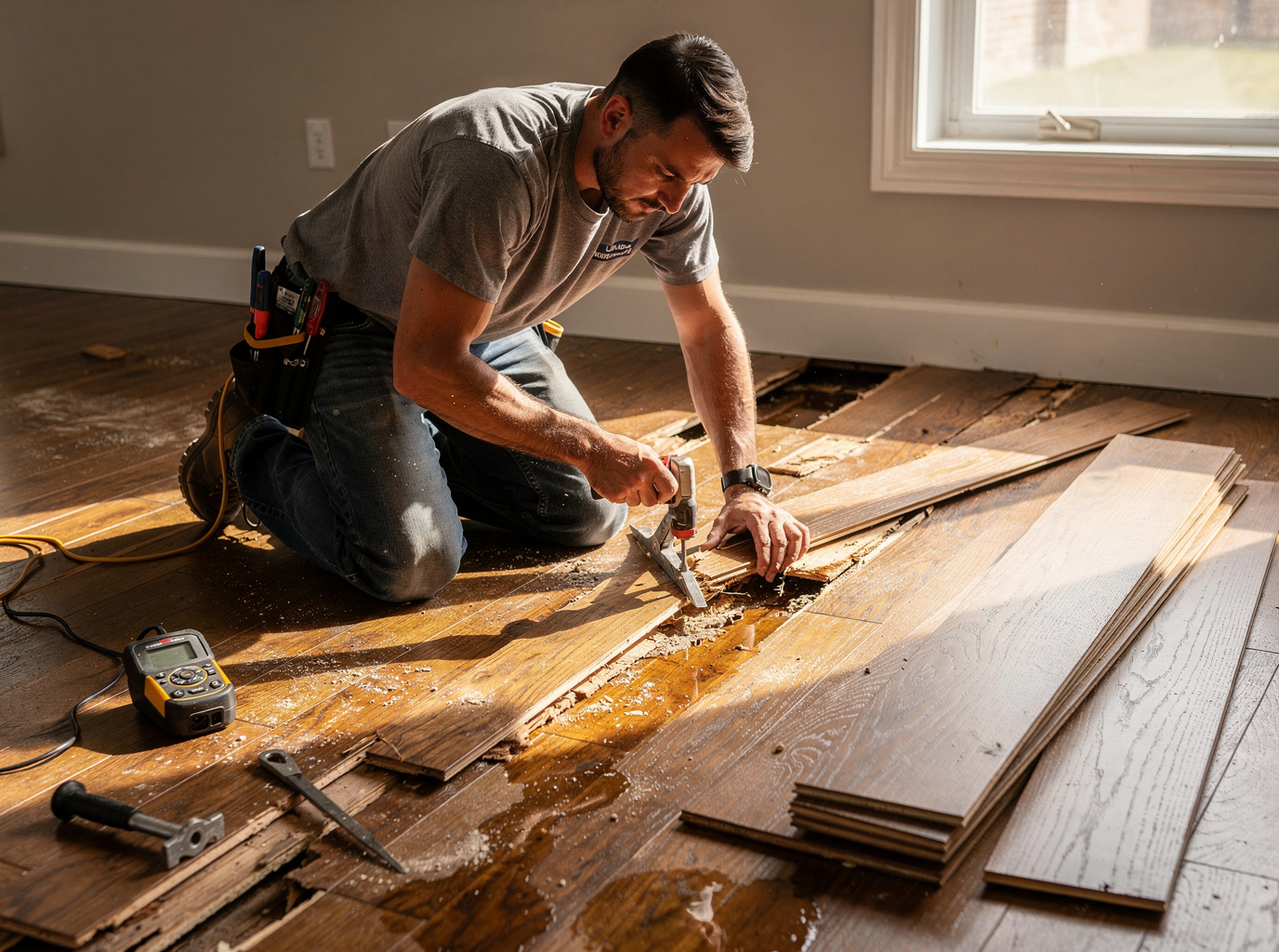
Hardwood is one of the trickiest materials we deal with after a water intrusion because the damage often keeps progressing long after the water is gone. Solid oak, pine, and engineered floors in older Austin homes around Hyde Park, Clarksville, and Travis Heights were installed decades before anyone thought about moisture barriers, so a slow supply line leak under a kitchen cabinet can travel under six or eight boards before you ever see cupping at the surface. We pull moisture readings from the subfloor, not just the top of the board, because surface-dry wood can still be sitting on a wet slab or joist system that will keep feeding the cupping and eventually cause crowning once we start drying too aggressively.
There's a real judgment call on refinish-versus-replace that separates an experienced crew from someone just running fans. Cupping under about 1/8 inch across the board width usually flattens out fine with slow, controlled drying and a sand-and-refinish once moisture content stabilizes near 6-9%. Past that, or if you see finish delamination, black staining between boards, or a spongy feel underfoot, the wood cells have broken down and sanding won't fix it — those boards need to come out. Engineered hardwood is less forgiving than solid because the veneer layer is thin; one aggressive sanding pass and you're through to the substrate, so those floors often get replaced in the wet zone even when solid wood next to them could be saved.
Slab homes are common in the newer parts of East Austin and Mueller, and hardwood installed directly over a slab with adhesive is a different animal than nail-down flooring over a crawlspace or pier-and-beam foundation, which you'll still find under a lot of the older houses near Zilker and Barton Hills. Adhesive-set floors trap moisture against the slab and can mold underneath even when the top looks fine, so we often have to pull sample boards to check the underside before deciding on a drying plan. We also flag when subfloor plywood has delaminated — that's a structural issue, not just cosmetic, and it needs to be addressed before any new flooring goes down or you'll be repeating this job in a year.
Hardwood Floor Water Damage Repair Services We Offer
✓Emergency Water Extraction From Hardwood
Fast standing-water removal to limit how far moisture travels under boards before it reaches subfloor and joists.
✓Cupping and Crowning Repair
Controlled drying and board-by-board assessment to flatten cupped hardwood without over-drying into crowning.
✓Board Replacement and Matching
Removal of ruined sections with species, stain, and plank-width matching so repairs blend into existing floor.
✓Subfloor Inspection and Repair
Checking joists, plywood, and slab beneath the hardwood for delamination or rot that has to be fixed before refinishing.
✓Engineered Hardwood Water Damage Repair
Targeted replacement of thin-veneer engineered boards where sanding isn't an option due to shallow wear layers.
✓Sand and Refinish After Drying
Full refinish once moisture content stabilizes, matching sheen and stain to the rest of the room.
✓Mold Remediation Under Flooring
Removing and treating mold growth found under adhesive-set or nail-down hardwood after prolonged moisture exposure.
Hardwood Floor Water Damage Repair Cost in Austin, TX
| Service | Typical Range | What Affects It |
|---|---|---|
| Emergency extraction and drying setup | $300–$900 | Depends on square footage and number of drying days needed |
| Localized board repair and refinish | $500–$1,800 | Number of boards affected and finish-matching complexity |
| Full-room hardwood replacement and refinish | $2,500–$7,000+ | Room size, wood species, and subfloor condition |
| Subfloor repair (if needed) | $400–$2,000 | Extent of delamination or rot found under the flooring |
| Mold treatment under flooring | $300–$1,200 | Size of affected area and severity of growth |
Ranges are typical for Austin, TX and confirmed with an exact written quote before any work starts.
How it works
- 1
On-Site Moisture Assessment
We check moisture content in the boards, subfloor, and surrounding walls to map how far the water actually traveled before quoting anything.
- 2
Extraction And Drying Setup
Standing water removed first, then air movers and dehumidifiers placed to bring moisture down slowly and evenly, avoiding shock-drying that causes crowning.
- 3
Damage Triage
Board by board, we mark what will flatten out after drying, what needs replacement, and whether the subfloor or slab underneath needs attention too.
- 4
Repair And Replacement
Damaged boards pulled and replaced with matched material; subfloor issues repaired before any new flooring goes down.
- 5
Sand, Refinish, And Final Check
Once moisture readings are stable, we sand and refinish to blend repairs with the existing floor and do a final walk-through with you.
Pricing
Pricing depends on how far the water traveled and whether the subfloor is affected — most hardwood jobs run from a few hundred dollars for spot drying and board repair up to several thousand for full-room replacement and refinish.