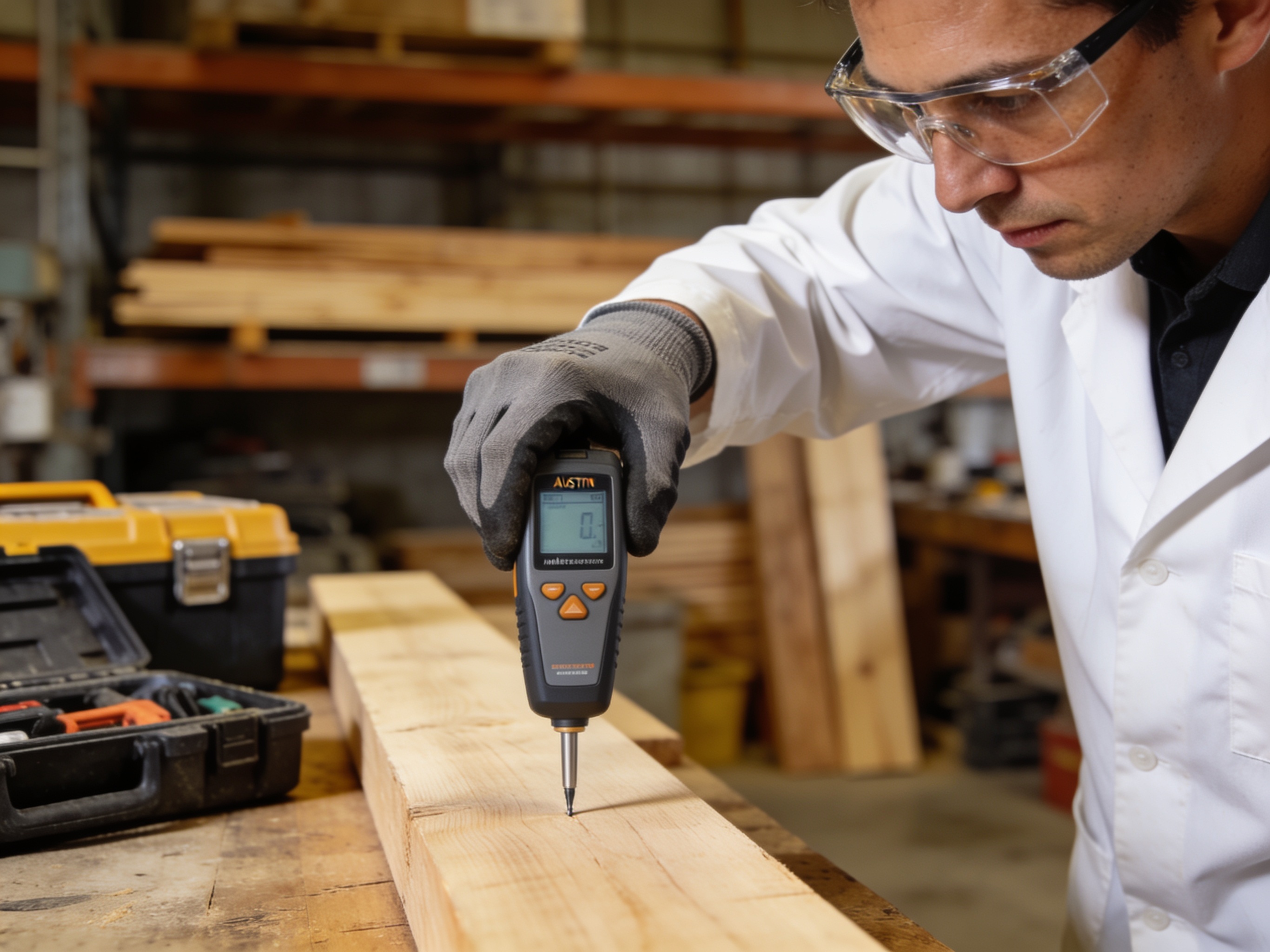
Moisture testing is the diagnostic step most homeowners skip until they've already got a mold problem or soft drywall. We use penetrating and non-penetrating moisture meters, thermal imaging, and hygrometers to find water intrusion that isn't visible yet. In Austin, this matters more than people think — homes in Hyde Park and Travis Heights with older plumbing, or newer builds near Mueller with tight envelopes, both trap moisture in different ways. A wall can read dry on the surface and still be saturated three inches deep behind the drywall.
Our humid summers push moisture into wall cavities and attics faster than in drier climates, and mild winters mean there's rarely a hard freeze to slow mold growth down — it can develop year-round here. We test framing, subfloor, insulation, and drywall moisture content against dry-standard baselines (usually under 16% for wood framing) to determine what's salvageable versus what needs to come out. Slab homes, common throughout South Congress and Zilker, present their own challenge: moisture can wick up through concrete without ever showing a visible leak, so we pair meter readings with relative humidity testing in the room.
One thing worth flagging: moisture testing after a known leak or flood isn't optional if you're dealing with insurance. Adjusters want documented pre- and post-mitigation readings, and without that paper trail claims get disputed or underpaid. We document every reading with photos, room diagrams, and time-stamped logs so there's no argument later about whether drying was actually completed. Skipping this step is the single most common reason we get called back to a property months later with a mold problem that could've been caught earlier.
Moisture Testing Services We Offer
✓Post-Flood Moisture Verification
Confirms structural materials have returned to safe dry-standard levels after flood or storm water intrusion, before repairs are closed in.
✓Hidden Leak Detection
Finds slow leaks behind walls, under flooring, or around plumbing fixtures before they cause visible staining or drywall failure.
✓Pre-Purchase Moisture Inspection
Checks a home for hidden moisture issues before closing, especially useful for older properties in Clarksville, East Austin, or Westlake.
✓Insurance Documentation Testing
Provides time-stamped moisture readings and reports adjusters require to support a water damage or flood claim.
✓Attic & Crawlspace Moisture Checks
Tests areas prone to condensation buildup from Austin's humid summers, where roof leaks or poor ventilation often go unnoticed.
✓Slab & Concrete Moisture Testing
Measures relative humidity and vapor emission from slab foundations, common in South Congress and Zilker homes, where wicking moisture hides without a visible leak.
✓Mold Risk Assessment Testing
Identifies moisture conditions favorable to mold growth so remediation can start before spores spread.
✓Post-Mitigation Drying Verification
Independent confirmation that a drying job — ours or another company's — actually met dry-standard benchmarks before rebuild begins.
Moisture Testing Cost in Austin, TX
| Service | Typical Range | What Affects It |
|---|---|---|
| Single-Room Moisture Check | $125–$250 | Basic meter reading, one affected area |
| Whole-Home Moisture Assessment | $300–$600 | Multiple rooms, thermal imaging included |
| Insurance Documentation Package | $200–$450 | Detailed report formatted for adjuster review |
| Slab Moisture & Humidity Testing | $150–$350 | Depends on slab area and number of test points |
| Post-Mitigation Verification | $150–$300 | Follow-up testing after drying equipment is removed |
Ranges are typical for Austin, TX and confirmed with an exact written quote before any work starts.
How it works
- 1
Initial Walkthrough
We inspect the affected area and any adjacent rooms, checking for visible damage, odors, or past repair history.
- 2
Meter & Thermal Scanning
We use penetrating and non-invasive moisture meters plus thermal imaging to map moisture across walls, floors, and ceilings.
- 3
Baseline Comparison
Readings are compared against dry, unaffected materials in the same structure to establish what's actually abnormal.
- 4
Documentation & Report
We log every reading with photos and diagrams, useful for insurance claims or contractor scope decisions.
- 5
Recommendations
We tell you plainly what's dry, what needs monitoring, and what needs remediation — no upselling drying equipment you don't need.
Pricing
Most standalone moisture testing visits in Austin run in the low hundreds; cost scales with square footage and how many rooms or materials need testing. We give upfront quotes before starting.