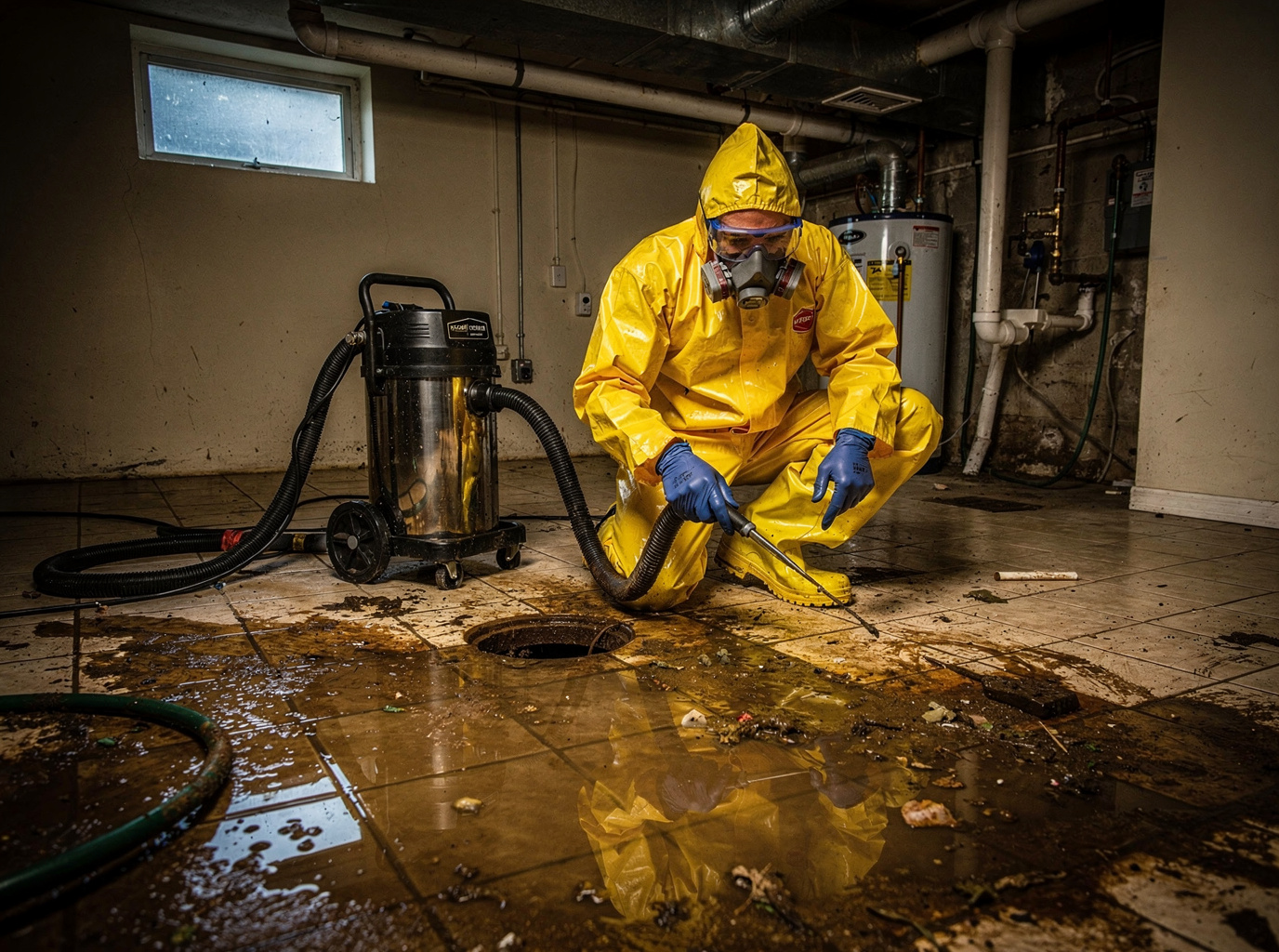
Sewage backup is classified as category 3 water — grossly contaminated with bacteria, viruses, and parasites — and it's treated completely differently from a clean water leak. Any porous material that contacted raw sewage, including drywall, carpet, pad, and most insulation, has to be removed and discarded per industry guidelines (IICRC S500); it isn't cleaned and reused. We've pulled backups out of older East Austin and Hyde Park homes with cast iron lines and newer Mueller builds alike — the pipe material doesn't matter once the line backs up into living space.
We see two common causes around Austin: tree root intrusion into clay or cast iron laterals (common in older Travis Heights and Clarksville lots with mature trees) and municipal line surcharges during heavy rain events that push flow backward through low fixtures like basement drains, tubs, and toilets. If the backup originated from the city main rather than your own lateral, that matters for liability and possibly for reimbursement — we document the source and photograph fixture levels before we touch anything.
Cleanup involves extraction of standing sewage, removal of contaminated materials, antimicrobial application, and structural drying with the same negative-pressure logic used in mold containment — you don't want aerosolized contaminants spreading into unaffected rooms. We wear appropriate PPE and set containment barriers, especially in multi-room or multi-level events like a Downtown condo where a backup on one floor can affect units below. Air scrubbers with HEPA filtration run alongside dehumidifiers to manage both moisture and airborne particulate during the dry-out phase.
One frequent mistake we correct: homeowners or handymen 'cleaning' sewage-affected drywall or carpet with bleach and calling it done. Bleach doesn't penetrate porous materials deep enough to neutralize category 3 contamination, and reinstalling flooring over a subfloor that wasn't properly disinfected and dried creates a hidden hazard. If your insurance adjuster is involved, category 3 losses typically require documentation showing removal of affected porous materials — not just surface treatment — for the claim to be processed cleanly.
Sewage Backup Cleanup Services We Offer
✓Toilet and Drain Backup Cleanup
Extraction and disinfection after sewage backs up through toilets, tubs, or floor drains — the most common call we get.
✓Sewer Line Backup Response
Coordination with your plumber to identify the blockage source while we handle contamination cleanup and structural drying.
✓Basement and Crawlspace Sewage Extraction
Low-lying areas take the worst of a backup; we pump out standing sewage and treat framing and subfloor before mold sets in.
✓Contaminated Material Removal and Disposal
Safe removal of sewage-affected drywall, carpet, pad, and insulation in line with category 3 handling practices.
✓Antimicrobial Treatment and Disinfection
Hospital-grade antimicrobial application on all contacted surfaces after contaminated materials are removed.
✓Structural Drying After Sewage Loss
Negative-pressure drying with air scrubbers and dehumidifiers to fully dry framing and subfloor without spreading contaminants.
✓Commercial Sewage Backup Cleanup
After-hours response for restaurants, offices, and retail spaces near Downtown and South Congress where downtime costs money.
Sewage Backup Cleanup Cost in Austin, TX
| Service | Typical Range | What Affects It |
|---|---|---|
| Small backup, single bathroom | $500–$1,500 | Limited affected area, minimal material removal |
| Multi-room or basement backup | $1,500–$4,500 | More material removal, larger drying footprint |
| Contaminated material removal and disposal | $300–$1,200 | Depends on volume of drywall, carpet, pad removed |
| Antimicrobial treatment | $150–$500 | Scales with square footage treated |
| Structural drying (per day of equipment) | $150–$400/day | Number of air movers, scrubbers, dehumidifiers needed |
Ranges are typical for Austin, TX and confirmed with an exact written quote before any work starts.
How it works
- 1
Emergency Call And Containment
We ask about the source and severity on the phone, then arrive and set containment barriers before extraction starts to stop contamination spread.
- 2
Extraction And Contaminated Material Removal
Standing sewage is pumped out and any affected porous materials are removed and bagged for proper disposal.
- 3
Disinfection
All surfaces that contacted sewage get antimicrobial treatment before drying equipment goes in.
- 4
Structural Drying And Monitoring
Air scrubbers, dehumidifiers, and air movers run with daily moisture checks until readings confirm the structure is dry.
- 5
Documentation And Rebuild Handoff
We provide photo documentation for insurance and can coordinate with your plumber or a rebuild contractor for repairs.
Pricing
Sewage backup jobs cost more than clean-water losses because of mandatory material removal and disposal — we give a written scope and price before work starts, not after.